A 30-yard roll-off container is engineered for mid-to-large capital remodeling and structural cleanouts where smaller bins cause site stoppage. In high-density settings like Koreatown apartment retrofits or expansive…
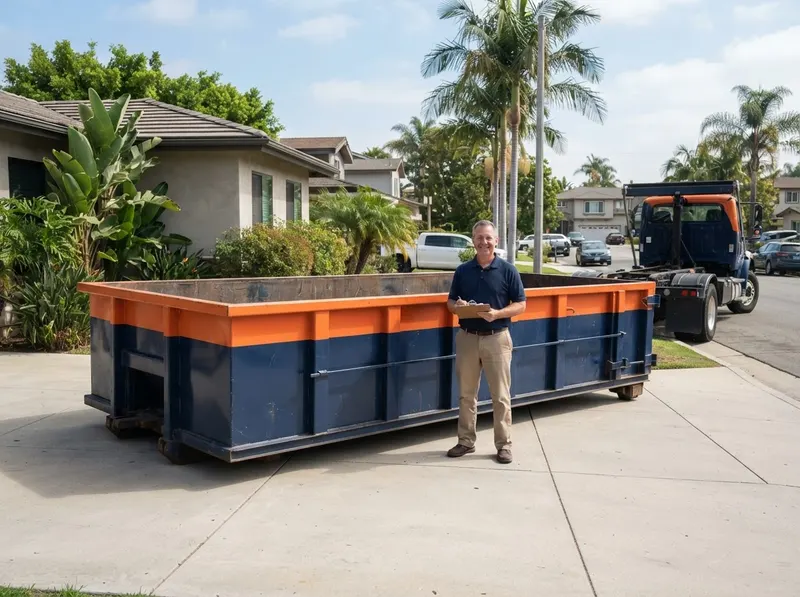
A 30-yard roll-off container is engineered for mid-to-large capital remodeling and structural cleanouts where smaller bins cause site stoppage. In high-density settings like Koreatown apartment retrofits or expansive estate remodels in Brentwood, a 30-yard container holds approximately 180 standard 33-gallon trash bags or 9 to 12 level pickup truck beds. Choosing a 30-yard over a 20-yard container prevents project halts caused by container overflow, while a 40-yard unit demands a longer staging footprint that frequently conflicts with tight driveway access or narrow staging areas. Solid waste disposal in the region adheres strictly to the operational recovery standards established by the California Department of Resources Recycling and Recovery and site oversight rules outlined by the California Division of Occupational Safety and Health.
Placement logistics require specific clearance calculations. Deploying roll-off equipment along public rights-of-way in hillside communities such as Silver Lake, Echo Park, and Los Feliz requires compliance with the City of Los Angeles Bureau of Street Services permit frameworks. Roll-off delivery trucks need 60 feet of direct straight-line approach and 23 feet of vertical clearance to hoist the container over overhead lines, tree canopies, and building overhangs. To protect driveways against point-load stress, placement crews set heavy ground-protection boards under the steel rollers, an essential protocol for historic properties across Leimert Park and Highland Park. Debris segregation also demands compliance with federal resource directives managed by the United States Environmental Protection Agency.
Material handling limits must be evaluated prior to loading. While dry construction demolition debris is standard, heavy dense materials require strict volume caps to remain within truck transport capacities set by the United States Department of Transportation. Loading unmixed concrete, broken asphalt, or compacted earth past one-third volume will overload the hoist mechanism; specialized low-sided inert bins are designated for solid aggregate instead. Regulated non-hazardous disposal flows through certified facilities governed by the Los Angeles County Public Works Department. All drop-offs avoid municipal utility obstructions under standards mapped by the Los Angeles Department of Water and Power, structural zoning mandates coordinated with the Los Angeles Department of Building and Safety, and clean-air logistics overseen by the South Coast Air Quality Management District. To confirm street clearances and schedule roll-off delivery, call (323) 205-7126.
Every job gets a firm, written price after a free on-site visit.
For standards, safe disposal, and service guidance on DUMPSTER in Los Angeles, CA, useful references include U.S. EPA, EPA, EPA, OSHA, Earth911, and Google Maps. General consumer and small-business resources are available from USA.gov, Better Business Bureau, FTC Consumer Advice, U.S. Small Business Administration, and Ready.gov.
Tell us about your 30-yard dumpster job in Los Angeles and we'll send a clear, written quote, usually the same day.
 UrbanCrate Disposal Group